
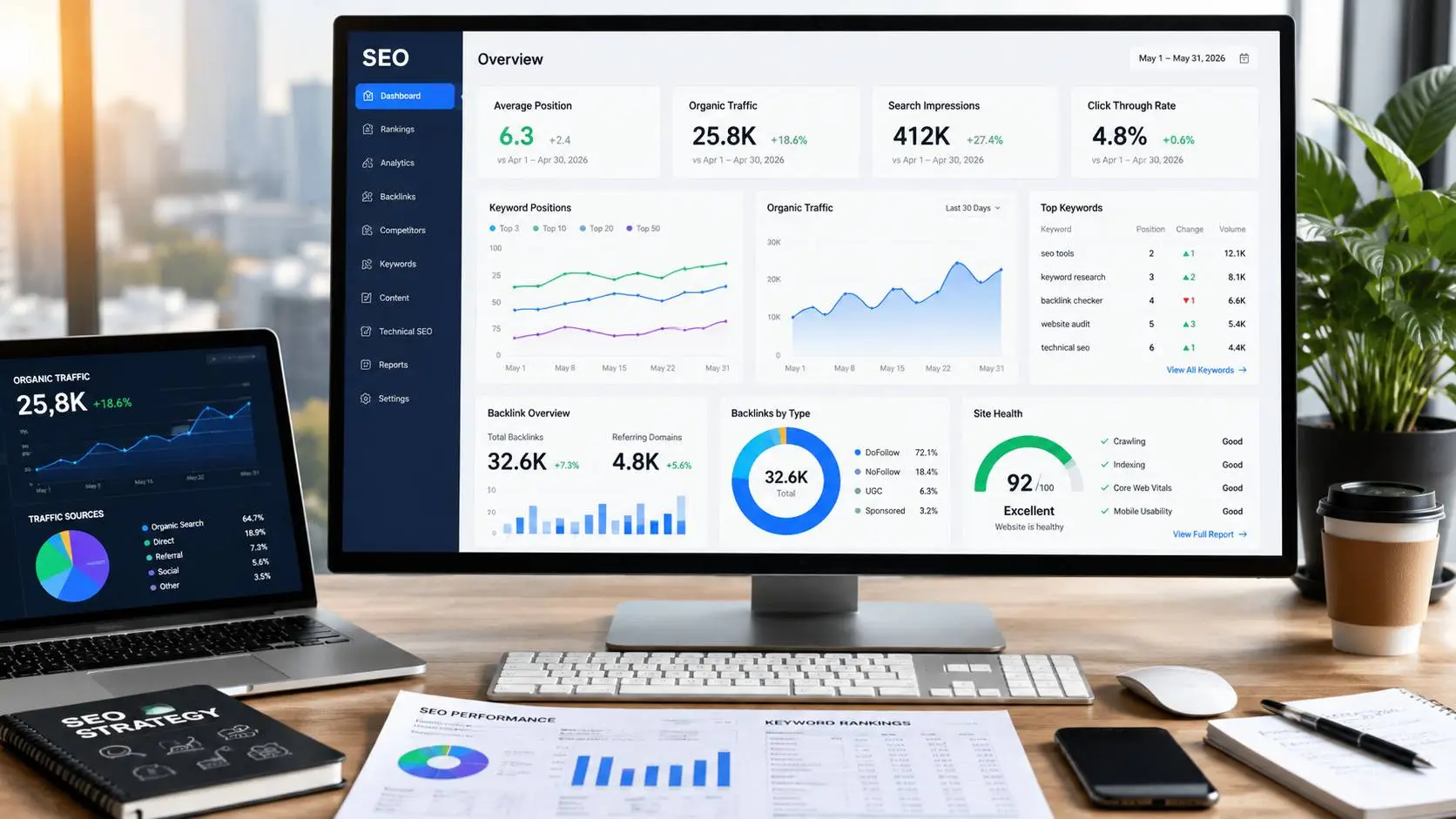
How to Rank on Google First Page Fast in 2026 is one of the most searched questions among website owners, bloggers, businesses, and digital marketers. Competition has become stronger, search algorithms continue to evolve, and AI-generated content has raised the quality standards for every website. Reaching Google’s first page now depends on creating useful content, building topical authority, improving technical SEO, and delivering an excellent user experience.
Google’s ranking systems evaluate hundreds of signals instead of relying on a single factor. Your website must demonstrate expertise, answer search intent clearly, load quickly, remain secure, and provide trustworthy information. When these elements work together, your chances of earning higher rankings increase significantly.
This guide explains practical strategies that continue to work in 2026 while showing how the free SEO tools available at All in One SEO Online (AIOSEO) can simplify your optimization workflow.
Why Google Rankings Changed in 2026
Google’s search ecosystem has become more intelligent than ever. Artificial intelligence helps Google understand topics, relationships between concepts, user intent, and content quality rather than simply matching keywords.
Several major changes influence rankings today:
- AI-powered search understands context instead of exact keyword repetition.
- User satisfaction signals carry more weight.
- Helpful, experience-based content performs better.
- Technical website health affects crawling efficiency.
- Topical authority often outranks isolated articles.
- Spam detection systems identify low-value AI-generated pages more effectively.
Rather than publishing hundreds of short articles, successful websites now focus on building complete topic clusters supported by original insights and trustworthy references.
Google’s Most Important Ranking Factors in 2026
The following table summarizes the ranking factors that deserve the highest priority.
| Ranking Factor | Importance | Why It Matters |
|---|---|---|
| Search Intent | Very High | Matches exactly what users expect |
| Helpful Content | Very High | Improves user satisfaction |
| EEAT Signals | Very High | Builds trust and authority |
| Core Web Vitals | High | Improves user experience |
| Mobile Friendliness | High | Most searches occur on mobile devices |
| Internal Linking | High | Helps search engines discover pages |
| Quality Backlinks | High | Strengthens website authority |
| Structured Data | Medium | Supports rich search results |
| Fresh Content | Medium | Keeps information relevant |
| Page Experience | Medium | Encourages longer engagement |
Instead of chasing every ranking signal equally, focus first on content quality, technical performance, and search intent.
Start with Search Intent, Not Keywords
One of the biggest SEO mistakes is choosing keywords before understanding what users actually want.
Every search belongs to one of four primary intent categories.
| Intent | Example Search |
|---|---|
| Informational | How to improve SEO |
| Navigational | Google Search Console |
| Commercial | Best SEO tools 2026 |
| Transactional | Buy SEO software |
Before creating any page, ask:
- What problem is the user trying to solve?
- What questions remain unanswered by competitors?
- Would someone feel satisfied after reading this page?
Pages that solve the complete problem generally outperform pages that simply repeat keywords.
Perform Smart Keyword Research
Keyword research remains the foundation of SEO, but modern keyword research focuses on topics instead of individual phrases.
Look for:
- Primary keyword
- Secondary keywords
- Related entities
- Question keywords
- Long-tail keywords
- Semantic variations
For example:
Primary Keyword
How to Rank on Google First Page Fast
Supporting Keywords
- Google ranking tips
- SEO strategy 2026
- Improve Google ranking
- Organic traffic
- Website SEO
- First page SEO
- Search engine optimization
- Keyword optimization
Rather than repeating one keyword dozens of times, naturally include related phrases throughout the article.
Build Topic Clusters Instead of Single Articles
Google prefers websites that demonstrate expertise across an entire subject.
Instead of publishing one article about SEO, create a structured content hub.
Example:
Complete SEO Guide
        │
        ├── Keyword Research
        ├── Technical SEO
        ├── On Page SEO
        ├── Link Building
        ├── Local SEO
        ├── AI SEO
        ├── Google Search Console
        ├── Core Web Vitals
        └── SEO Tools
This approach establishes topical authority and encourages search engines to crawl related content more efficiently.
Choose Keywords with Ranking Potential
Many beginners target extremely competitive keywords immediately.
A better strategy is balancing search volume with ranking difficulty.
| Keyword Type | Difficulty | Recommendation |
|---|---|---|
| Short Tail | Very High | Long-term target |
| Medium Tail | Medium | Excellent choice |
| Long Tail | Low | Fastest ranking opportunity |
| Question Keywords | Low | Great for Featured Snippets |
Long-tail keywords often convert better because users have clearer intent.
Analyze Your Competitors
Ranking on Google’s first page requires understanding what already ranks.
Review the top 10 results for your target keyword and evaluate:
- Content length
- Heading structure
- Images
- Internal links
- External references
- FAQ sections
- Page speed
- Search intent coverage
Your objective is not to copy competitors but to create a more complete and useful resource.
Optimize Your SEO Workflow
A consistent workflow reduces errors and saves time.
Recommended optimization process:
- Research keywords.
- Identify user intent.
- Create a detailed outline.
- Write original content.
- Optimize meta tags.
- Improve readability.
- Add internal links.
- Include authoritative external references.
- Check keyword placement.
- Publish and monitor performance.
Following the same process for every article creates a strong foundation for long-term organic growth.
Helpful SEO Tools for This Stage
During keyword research and planning, these tools can streamline your workflow:
| Task | Recommended Tool |
|---|---|
| Keyword Ideas | Keywords Suggestion Tool |
| CPC Research | Keyword CPC Calculator |
| Keyword Groups | AI Keyword Cluster Ideas |
| Title Optimization | AI SEO Meta Title Generator |
| Description Writing | AI SEO Meta Description Generator |
| Meta Analysis | Meta Tags Analyzer |
| Keyword Usage | Keyword Density Checker |
| Word Count | Word Counter |
Using the right tools early helps prevent common optimization mistakes before publishing.
On-Page SEO, Technical SEO, and Authority Building
After selecting the right keywords and understanding search intent, the next step is optimizing your website for both users and search engines. Even high-quality content can struggle to rank if the page loads slowly, lacks proper structure, or fails to demonstrate trustworthiness.
This section covers the optimization techniques that help websites compete for Google’s first page in 2026.
Master On-Page SEO
On-page SEO ensures every page clearly communicates its topic to search engines while providing a smooth reading experience.
Focus on these essential elements.
| On-Page Element | Best Practice |
|---|---|
| Title Tag | Include the primary keyword naturally |
| Meta Description | Summarize the page and encourage clicks |
| URL | Keep it short, descriptive, and readable |
| H1 Heading | Use only one H1 per page |
| H2 & H3 Headings | Organize content into logical sections |
| Images | Compress files and use descriptive ALT text |
| Internal Links | Connect related pages naturally |
| External Links | Reference trusted sources where appropriate |
Avoid stuffing keywords into every heading. Instead, use related phrases that match the topic naturally.
Write SEO-Friendly Titles
Your title tag influences both rankings and click-through rates.
A strong SEO title should:
- Include the primary keyword near the beginning
- Stay under 60 characters
- Clearly describe the page
- Encourage users to click
- Avoid unnecessary punctuation
Examples:
✅ How to Rank on Google First Page Fast in 2026
✅ Google SEO Guide: Proven Ranking Strategies
❌ SEO SEO Google Rank Fast Best Tips 2026
Optimize Meta Descriptions
Although meta descriptions are not a direct ranking factor, they improve click-through rates.
A good description should:
- Begin with the primary keyword
- Explain the page’s value
- Stay under 156 characters
- Include a clear benefit
Generating optimized titles and descriptions becomes easier with an AI-powered meta generator that creates search-friendly snippets while maintaining natural language.
Create Clean URLs
URLs help both users and search engines understand page content.
Preferred format:
example.com/how-to-rank-on-google-first-page-fastAvoid:
example.com/post?id=4589&page=12&cat=seoKeep URLs:
- Short
- Readable
- Keyword-focused
- Lowercase
- Free of unnecessary numbers
Improve Content Readability
Google rewards content that users can read comfortably.
Best practices include:
- Short paragraphs
- Descriptive headings
- Bullet points
- Numbered lists
- Comparison tables
- Relevant images
- Clear formatting
Most readers scan pages before reading in detail. Structured content helps them find answers quickly.
Optimize Images for SEO
Images contribute to both user experience and search visibility.
For every image:
- Compress file size
- Use modern formats such as WebP
- Add descriptive ALT text
- Use meaningful filenames
- Implement lazy loading
Example:
Instead of:
IMG_5487.jpgUse:
google-first-page-ranking-guide.webpStrengthen Internal Linking
Internal links help Google discover pages while distributing authority across your website.
Benefits include:
- Faster indexing
- Better crawl efficiency
- Increased page views
- Stronger topical authority
- Improved user navigation
For example, an article about Google rankings can naturally reference related resources on keyword research, backlinks, technical SEO, and meta tags.
Keep internal links relevant and avoid forcing them into unrelated content.
Earn High-Quality Backlinks
Backlinks remain one of Google’s strongest ranking signals.
Quality matters far more than quantity.
Effective backlink sources include:
| Source | Value |
|---|---|
| Industry blogs | High |
| Guest posts | High |
| Digital PR | High |
| Resource pages | Medium |
| University websites | Very High |
| Government websites | Very High |
| Business partnerships | Medium |
Avoid purchasing spammy backlinks or participating in link schemes. Google’s spam detection systems are more effective than ever.
Build Topical Authority
Google increasingly favors websites that cover a subject comprehensively rather than publishing isolated articles.
For example, if your website focuses on SEO, include detailed content on:
- Keyword research
- Technical SEO
- Local SEO
- Link building
- Website speed
- Structured data
- Search Console
- Analytics
- AI SEO tools
- Content optimization
When these pages link naturally to one another, search engines gain a clearer understanding of your expertise.
Focus on EEAT
Google evaluates content using the principles of:
- Experience
- Expertise
- Authoritativeness
- Trustworthiness
Ways to strengthen EEAT include:
- Publish accurate, well-researched content
- Cite reliable sources
- Display author information
- Keep articles updated
- Provide original insights and examples
- Maintain transparent contact and about pages
- Secure the website with HTTPS
Users are more likely to trust websites that demonstrate real-world knowledge and credibility.
Improve Core Web Vitals
Core Web Vitals measure how users experience your website.
The three primary metrics are:
| Metric | Recommended Value |
|---|---|
| Largest Contentful Paint (LCP) | Under 2.5 seconds |
| Interaction to Next Paint (INP) | Under 200 ms |
| Cumulative Layout Shift (CLS) | Under 0.1 |
Improving these metrics can enhance both user satisfaction and search performance.
Common optimizations include:
- Faster hosting
- Image compression
- Browser caching
- Minified CSS and JavaScript
- Content Delivery Network (CDN)
- Reduced third-party scripts
Ensure Mobile Optimization
Most Google searches now occur on mobile devices.
Your website should:
- Adapt to all screen sizes
- Use readable font sizes
- Provide touch-friendly buttons
- Avoid intrusive pop-ups
- Load quickly on mobile networks
Responsive design is no longer optional—it is expected.
Add Structured Data
Structured data helps search engines understand your content and can improve how it appears in search results.
Useful schema types include:
- Article
- FAQ
- Breadcrumb
- Organization
- Website
- Person
- Product
- Review
Proper implementation may increase visibility through rich results, though Google decides when to display them.
Optimize for Featured Snippets
Featured snippets often appear above traditional search results.
Increase your chances by:
- Answering questions directly
- Using numbered lists
- Creating comparison tables
- Keeping definitions concise
- Organizing content with clear headings
Example:
What is On-Page SEO?
On-page SEO is the practice of optimizing individual web pages to improve their visibility in search engines and provide a better experience for users.
Publish Fresh Content
Google values content that reflects current information.
Regularly review older articles to:
- Update statistics
- Replace outdated screenshots
- Improve examples
- Expand sections
- Add new internal links
- Refresh external references
Updating existing pages is often more effective than publishing numerous low-value articles.
Monitor SEO Performance
SEO is an ongoing process.
Track key metrics such as:
| Metric | Why It Matters |
|---|---|
| Organic Traffic | Measures search visibility |
| Keyword Rankings | Shows ranking progress |
| Click-Through Rate | Indicates title effectiveness |
| Indexed Pages | Confirms Google indexing |
| Bounce Rate | Reflects user engagement |
| Backlinks | Measures authority growth |
| Core Web Vitals | Evaluates page experience |
Review these metrics regularly to identify opportunities for improvement.
Getting to Google’s first page is only the beginning. Staying there requires continuous improvement, performance monitoring, and adapting to algorithm updates. This section outlines a practical roadmap for improving rankings over the next 90 days while avoiding the most common SEO mistakes.
90-Day SEO Action Plan
Follow this structured plan to build momentum without overwhelming your workflow.
| Timeframe | Focus Area | Recommended Tasks |
|---|---|---|
| Days 1–30 | Research & Foundation | Keyword research, competitor analysis, technical SEO audit, create content plan |
| Days 31–60 | Content & Optimization | Publish high-quality articles, improve internal linking, optimize images, implement schema |
| Days 61–90 | Authority & Growth | Earn backlinks, update older content, monitor rankings, improve Core Web Vitals |
Consistency is more valuable than publishing a large amount of content in a short period.
Weekly SEO Checklist
Use this checklist to maintain steady progress.
- Publish one or two high-quality articles.
- Update an older post with fresh information.
- Review keyword rankings.
- Fix broken links.
- Improve internal linking.
- Compress newly uploaded images.
- Check page speed.
- Monitor indexing status.
- Review Google Search Console reports.
- Analyze competitor content.
Small improvements each week often produce stronger long-term results than occasional major updates.
Common SEO Mistakes to Avoid
Many websites fail to rank because of preventable issues rather than poor content.
| Mistake | Better Approach |
|---|---|
| Keyword stuffing | Use natural language and semantic keywords |
| Duplicate content | Publish original, valuable information |
| Thin pages | Cover topics comprehensively |
| Slow website | Optimize images, scripts, and hosting |
| Poor internal linking | Connect related content logically |
| Ignoring mobile users | Use responsive design |
| Missing meta tags | Write unique titles and descriptions |
| Low-quality backlinks | Focus on editorial, relevant links |
| Publishing without updates | Refresh important pages regularly |
Avoid shortcuts that promise instant rankings. Sustainable SEO is built through quality and consistency.
Advanced Google Ranking Tips for 2026
Once the fundamentals are in place, these strategies can provide an additional competitive advantage.
Build Topical Clusters
Create groups of related articles that support a primary pillar page. This strengthens topical authority and helps search engines understand the depth of your expertise.
Optimize for AI Search
Write clear answers, use descriptive headings, and organize information logically. AI-powered search experiences often prioritize content that is easy to understand and well structured.
Answer Real User Questions
Use frequently asked questions from your audience, customer support, and keyword research tools. Direct answers increase the likelihood of appearing in featured snippets and AI-generated summaries.
Improve Click-Through Rate
Even a page ranking in the top five positions can gain more traffic by improving its title and meta description. Test different wording that accurately reflects the content while encouraging clicks.
Strengthen Brand Signals
Maintain consistent branding across your website, social profiles, and business listings. Strong brand recognition supports trust and may improve user engagement.
Essential SEO Tools for Better Rankings
The right tools help identify issues before they affect rankings.
| SEO Task | Recommended Tool |
|---|---|
| Keyword Research | Keywords Suggestion Tool |
| Keyword Position Tracking | Keyword Position Checker |
| Content Optimization | Keyword Density Checker |
| Meta Tags | Meta Tag Generator |
| XML Sitemap | XML Sitemap Generator |
| Robots File | Robots.txt Generator |
| Page Speed | PageSpeed Insights Checker |
| Backlink Analysis | Backlink Checker |
| Domain Strength | Domain Authority Checker |
| Technical Audit | Link Analyzer Tool |
Using specialized tools throughout the optimization process improves efficiency and helps maintain consistent quality.
Measure SEO Success
SEO performance should be evaluated using measurable data rather than assumptions.
Track these key metrics regularly:
- Organic traffic growth
- Average keyword position
- Search impressions
- Click-through rate (CTR)
- Indexed pages
- Conversion rate
- Bounce rate
- Returning visitors
- Referring domains
- Core Web Vitals
Monthly reporting makes it easier to identify trends and prioritize future improvements.
Frequently Asked Questions (FAQ)
How long does it take to rank on Google’s first page?
The timeline depends on competition, website authority, content quality, and backlink profile. Low-competition keywords may rank within a few months, while highly competitive topics often require sustained optimization over a longer period.
Can AI-generated content rank on Google?
Yes, provided it is accurate, original, helpful, and reviewed for quality. Google evaluates the usefulness of content rather than the method used to create it.
Are backlinks still important in 2026?
Yes. High-quality, relevant backlinks remain a strong ranking signal. Focus on earning links from authoritative websites instead of acquiring large numbers of low-quality links.
Does website speed affect SEO?
Yes. Fast-loading pages improve user experience and contribute to stronger performance in search results, particularly when combined with good Core Web Vitals scores.
How often should I update existing content?
Review important pages every few months or whenever significant changes occur in your industry. Updating statistics, examples, and links helps maintain relevance.
Is keyword density still important?
Rather than targeting a specific percentage, use the primary keyword naturally alongside related terms and entities. Writing for users first generally produces better results.
Final Thoughts
Ranking on Google’s first page in 2026 is achieved through a combination of high-quality content, technical excellence, strong topical authority, and continuous optimization. Focus on solving user problems, maintaining a technically sound website, publishing original content, and tracking performance over time. By following the strategies outlined in this guide, you can build sustainable organic visibility and compete effectively in modern search results.